






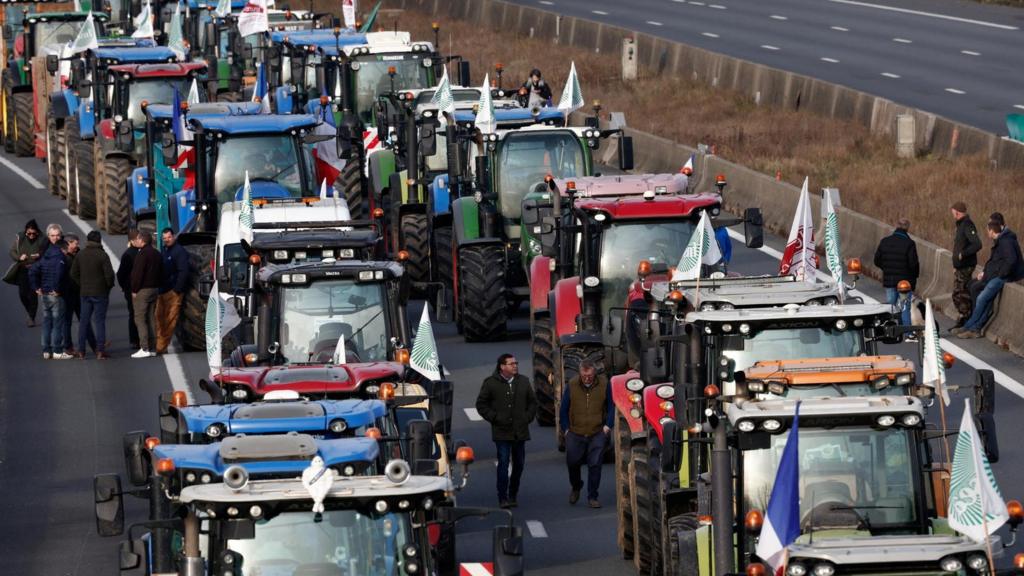
On January 13, 2026, hundreds of French farmers steered around 350 tractors through the streets of Paris, driving past iconic landmarks like the Champs-Élysées and the Arc de Triomphe to reach the French National Assembly — the country’s parliament.
These dramatic demonstrations were organized just days before the EU and Mercosur trade agreement was due to be finalised in Paraguay, a deal that would create one of the world’s largest free-trade areas between the European Union and four South American nations (Argentina, Brazil, Paraguay, Uruguay).
Why Farmers are Angry
The protesting farmers say that the EU-Mercosur deal threatens their livelihoods by allowing cheaper agricultural imports from South America. They argue these imports do not meet the same strict EU quality, environmental and animal-welfare standards, and could undercut French farmers’ prices, pushing many out of business.
Farmers also face their own domestic challenges — including low incomes, rising costs for things like fuel, fertilizer and feed, and burdensome regulations — which have added to their frustration.
Several major farming unions, including FNSEA and Jeunes Agriculteurs, led the protest, demanding urgent government action to protect rural jobs and France’s food security.
What Happened During the Protest
- Tractors blocked rush-hour traffic in central Paris.
- Farmers parked tractors near the National Assembly, sounding horns and displaying banners demanding support for French agriculture.
- The protest followed similar actions in the past week, including other tractor convoys and road blockages around the city.
Government Response & Political Impact
France’s government, including President Emmanuel Macron, has faced pressure from the protesters. Macron has stated that France intends to vote against the Mercosur deal at the EU level, reflecting broad opposition within the country — especially among rural voters.
At the same time, many other EU nations still support the trade pact, and the accord is expected to be signed and eventually implemented, though its ratification in the European Parliament remains uncertain.
Broader Context
The tractor protests in Paris are part of a wider wave of European farmers’ actions against trade agreements and agricultural policies they see as unfair. Similar protests have also occurred in Brussels and other EU nations.