





The recent announcement of new equity regulations by the University Grants Commission has triggered a nationwide debate, drawing strong reactions from students, political parties, and academic circles. Although the rules were introduced by the UGC, the controversy has increasingly placed the ruling Bharatiya Janata Party at the centre of political criticism.
The regulations, officially titled Promotion of Equity in Higher Education Institutions Regulations, 2026, were released with the stated aim of preventing caste-based discrimination in universities and colleges across India. However, within days of their announcement, the rules became a flashpoint for protests and political confrontation.
What Are the New UGC Rules?
Under the new framework, all higher education institutions are required to establish Equal Opportunity Cells and dedicated grievance redressal committees. These bodies are meant to address complaints related to discrimination, ensure equal treatment of students, and promote inclusivity on campuses.
The UGC has maintained that these measures are essential to create a safer and more equitable academic environment, particularly for students from marginalized communities. According to the commission, the regulations are preventive in nature and aim to strengthen accountability within institutions.
Why Has the Controversy Erupted?
Opposition to the rules emerged almost immediately. Critics argue that while the intent may be positive, the regulations lack clear safeguards against false or malicious complaints. Many student groups and faculty associations have expressed concern that the absence of strict penalties for misuse could lead to harassment of teachers and administrators.
Another key criticism is the perceived vagueness in defining discrimination, which, according to opponents, could result in subjective interpretations and administrative overreach.
Why Is BJP Being Targeted?
Although the UGC is an autonomous statutory body, it functions under the Ministry of Education, which falls under the central government. As a result, political responsibility has been indirectly linked to the BJP-led government at the Centre.
What has intensified the issue is that discontent has not been limited to opposition parties alone. In several states, student wings and individuals associated with BJP-aligned organizations have also raised objections, seeking clarification and amendments to the regulations. Reports of internal disagreements and resignations have further added to the political pressure on the party.
Student Protests Across States
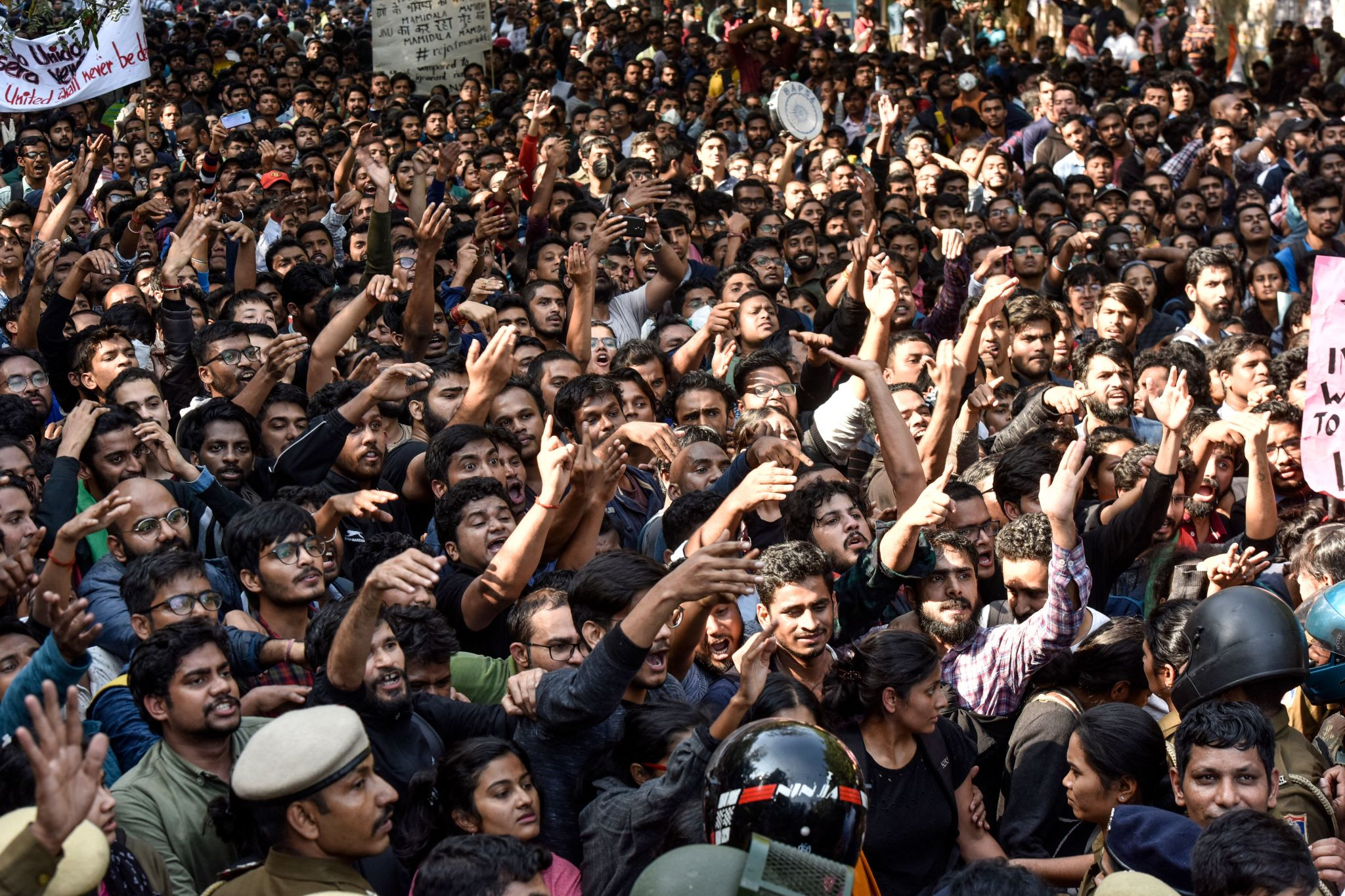
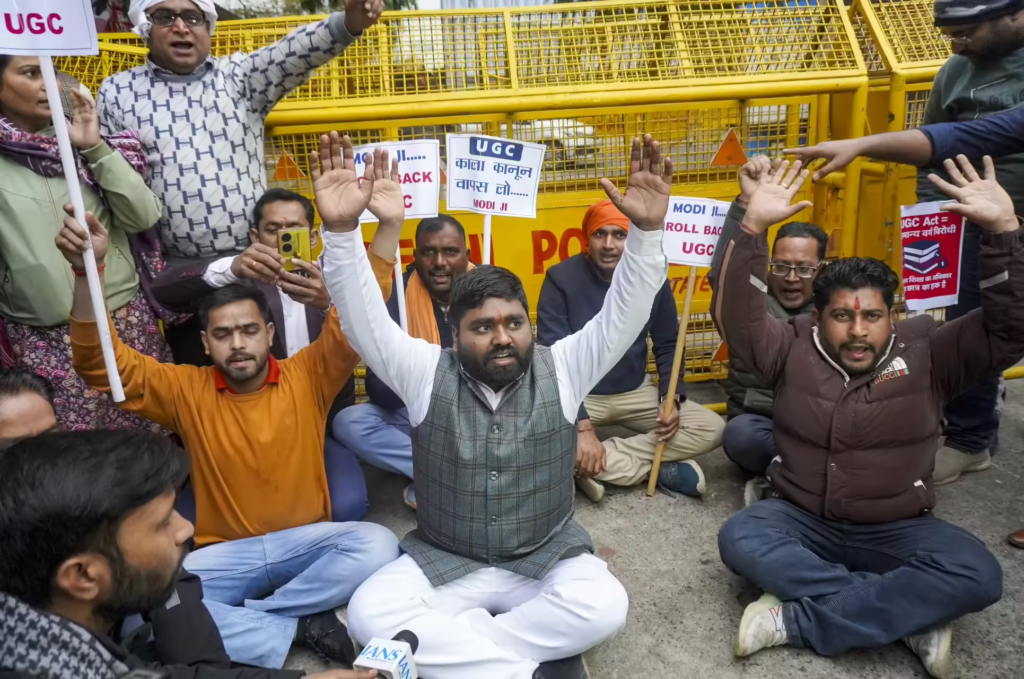
Student protests have been reported in parts of Uttar Pradesh, Rajasthan, Delhi, and other regions. Demonstrators have demanded either a rollback of the regulations or clear amendments to prevent misuse. In many campuses, students submitted memorandums to college administrations and staged peaceful demonstrations.
Protesting students have emphasized that they support the fight against discrimination but oppose what they describe as “unclear and potentially harmful” provisions.
Government and Supporters Respond
Supporters of the regulations argue that the backlash is based on misinformation. According to them, the rules do not presume guilt and mandate proper inquiry before any action is taken. They insist that genuine cases of discrimination have long been ignored and that the new framework finally provides victims with a formal mechanism for justice.
Government sources have also hinted that the regulations are open to review, suggesting that constructive feedback may lead to refinements without diluting the core objective of equity.
Matter Reaches the Supreme Court
The controversy has now moved beyond politics and entered the legal arena. Petitions challenging the validity of the UGC’s equity regulations have been filed before the Supreme Court. The petitioners argue that the rules violate principles of natural justice and could be misused.
The court’s response and future hearings are expected to play a crucial role in determining whether the regulations remain unchanged, are amended, or face partial suspension.
Political Implications
Political analysts believe the issue carries broader implications, especially with elections approaching in several states. Education-related policies often resonate deeply with students, parents, and teachers, making the controversy politically sensitive.
For the BJP, the challenge lies in balancing its commitment to social justice with concerns raised by its support base. A misstep on either side could have electoral consequences.
What Lies Ahead?
The coming weeks will be critical as:
- The Supreme Court considers petitions against the rules
- The UGC evaluates feedback from stakeholders
- The government decides whether to intervene or issue clarifications
One thing is certain: the UGC’s equity regulations have evolved from an administrative reform into a national political and social debate.
Conclusion
While the stated goal of the UGC’s new regulations is to ensure fairness and prevent discrimination in higher education, the lack of clarity and fear of misuse have fueled widespread opposition. The resulting controversy has placed the BJP in a difficult position, forcing it to respond to criticism from both opposition parties and within its own ecosystem.
How this issue unfolds—through legal scrutiny, policy revision, or political negotiation—will shape not only the future of these regulations but also the broader discourse on equity and governance in Indian higher education.